Thursday, March 22, 2007

We loves you, Porgy


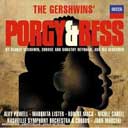
New Porgy and Bess out on disc

True confessions: until the release of Decca's new Porgy and Bess, I haven't much cared about the two stupid questions that won't go away: Is the Gershwins' Porgy and Bess a real opera, and if so, is it a great one? If Berg's Lulu is an opera, and great (both articles of faith with me), why not Porgy?


But the real reason I haven't bothered about it is that, until now, I've never heard a performance of Porgy (live or recorded) that did much for me. Now having been knocked sideways by this Porgy and Bess, brilliantly led by John Mauceri, I'm on board. This is great stuff.


The ostensible selling point of this Porgy is, of all things, the version. The work of a posse of Gershwin scholars including Mauceri, it is the first recorded Porgy that reflects the show the Gershwins and DuBoses continuously refined for its 1935 Broadway premiere, the tour that followed, and, after Gershwin's death in 1937, a California tour in 1938.


Most performances since 1938 have been based on the original printed score, which was published before the Broadway premiere and really counts as the creators' first, not final, thoughts on it. The Gershwin scholars (fanatics all) behind this new version have scoured all of the available performing materials to arrive at an accurate version of the 1935 performing score, which, just for starters, shaves an hour (and a CD) off the three-and-a-half-hour running time of the "original." In their own words, it "restores the cuts." Take that, authenticists!


Still, musicology, however keen, has never sold audiences on anything. This Porgy
will snag you with its vitality — make that spunk. Mauceri makes good on his assertion that "Porgy and Bess is our great American opera." It's as true to life and involving as you could stand it to be.
The previous Porgys I know have fallen somewhere between overwrought musicals and awkward, self-conscious operas. But Mauceri's instincts for musical theater rival the masters'. This Porgy isn't just "right." It grabs you from its first gesture — a big, Rhapsody in Blue-like glissando — then, in the language of music theater, never lets you go.


With most new critical editions, only experts can hear all but a few of the changes. I can't say that I noticed all of the "literally thousands" of changes the Porgy sleuths have made, but scarcely a second passes without something sounding new, and better. The brighter, jazzier colors in the final instrumentation are only the most obvious improvements. More important, in their fleet new shapes, whole scenes sweep away the old and replace it with something infinitely more believable and striking.

Before spinning these discs, I watched the EMI DVD of the Glyndebourne Porgy, with Simon Rattle leading a highly conscientious reading of the "complete" opera. Its merits notwithstanding, it's a proper, British Porgy that tries so hard to get the idiom right and not offend that it's always walking on eggs. Gratifying as it is that Rattle gives the same attention to Porgy as he does to Fidelio, Mauceri (who's also conducted Fidelio at the Met, and Lulu in SF) drives a performance perhaps only an American could. He and his musicians, including the ace Nashville Symphony Orchestra and Chorus, are steeped in the idiom, nail it, and give us a Porgy that sizzles.
To a one, Mauceri's singers are fine vocalists, but not one of them would settle for that alone. Their performances are amply operatic, whatever that means, but artistically at least, these risk-takers exchange vital body fluids, some of which also get on you. You get all snaggled up in their beautiful, sad, messy lives, and when was the last time that happened to you at the opera?
Instead of making a meal of "Summertime," as every soprano I've heard sing it has, Nicole Cabell's Clara makes a picnic of it, beautifully foreshadowing the actual picnic a short act away. Bess' short revival of it as a lullaby, as she watches over Clara's child, is charged with undertones of the danger that infuses the daily lives of these pithy survivors.
Alvy Powell's Porgy is, despite being a paraplegic, no Goody Two-Shoes, yet he's never less than sympathetic. Marquita Lister gives us a Bess (who, despite Porgy's famous tune, is three different men's woman at some point) who actually sounds different when she's with each of them.
Shining like a klieg light over his brilliant colleagues is Robert Mack's vocally snazzy, dramatically savvy Sporting Life. You only think you know "It Ain't Necessarily So" and "There's a Boat Dat's Leaving Soon for New York."
In the irrefutable words of the chorus, "Oh, I can't sit down."


Wednesday, March 21, 2007

Nicole's début at Carnegie Hall

... Anyone who was at
Carnegie last night enjoyed an unforgettable experience. There is a difference between high school and adult choirs, and it's one that the Viennese and Anglicans have known for at least 600 years. Young voices have a more pure tone, a more silken texture than mature voices, and their sound filled the Isaac Stern Auditorium last night with an incandescent glow. Close your eyes, and you might have imagined you were sitting in a great Gothic cathedral.

The first half of the program featured each of the four choirs singing a capella or piano arrangements of various hymns and songs, conducted by their regular choral directors. The selections ranged from Jan Sweelink's 1626 setting of Psalm 96, to the Latin hymn Lux Aurumque, written in 2000 by 36 year old Eric Whitacre. I felt a bit uneasy when the Bentonville High School Chamber Choir - a public high school - chose to perform a rousing Gospel song called Worthy to Be Praised, but it got by far the biggest ovation of the night.
After the intermission, the combined choirs - nearly 200 singers in all - were joined by the Orchestra of St. Luke's for Stravinsky's Symphony of Psalms and Poulenc's Gloria. Dr. Jessop paused to say a few words beforehand, reminding us that these works were challenging for an adult choir to pull off, much less high school students. In the Gloria, the choir was joined by the talented American soprano Nicole Cabell, who made her Covent Garden debut this season and is engaged to sing at the Met in upcoming seasons. Her voice had a dark radiance, effectively penetrating the huge sound projecting from behind her.
After the music ended, Jessop brought out all the individual choral directors to share in the huge standing ovation, a moment they seemed to cherish even more than the kids, who will likely have to wait for their grandchildren to realize just how magical last night was.

Saturday, March 17, 2007

Imelda de’ Lambertazzi


Reviews of Imelda de' Lambertazzi at Queen Elizabeth Hall, London


It used to be assumed that because Donizetti had composed so many operas – his nickname was “Dozzinetti”, man of the dozen – only a handful could withstand serious consideration. That view is looking increasingly suspect, thanks to a recent surge of recordings, revivals and research. There is much more to him than Lucia di Lammermoor, Maria Stuarda and Don Pasquale – if only we would open our ears. Intelligently prepared concert performances such as this, promoted by Opera Rara and the Orchestra of the Age of Enlightenment, reveal a dramatist of consistency and daring.
It’s hardly surprising that Imelda de’Lambertazzi, first produced in Naples in 1830 and then virtually forgotten for 150 years, disconcerted its early listeners. There was no overture, remarkably little vocal decoration, scarcely a pause for reflection. The drama came first, second and third, making for a wonderfully compact score that Verdi must surely have learned from a decade later. Here is a composer not pandering to expectations but breaking new ground – and paying heavily for it.


The plot, drawn from medieval Bolognese chronicles, is a standard tale of tragic love snared by the feuding of two powerful families. What distinguishes Imelda from other such operatic fables is that it’s not the tenor who gets the woman but Bonifacio the baritone – a quirk of circumstance, dictated by Donizetti’s recognition of the outstanding gifts of Antonio Tamburini, destined to become one of the most famous baritones of his day.
James Westman took some time to get inside the part: his voice, well-produced but not specially interesting, summoned the necessary intensity only in the second half. Nicole Cabell’s Imelda was mistress of the beautifully spun line, albeit short of expressive vulnerability. The real fireworks came from two well- contrasted tenors – Massimo Giordano, wonderfully Italianate as the brutish young Lorenzo, and Frank Lopardo, singing as handsomely as he has ever done in the father-role of Orlando. The OAE relished Donizetti’s primary orchestral timbres, and Mark Elder’s conducting generated tremendous heat and stylistic assurance.


Andrew Clark, Financial Times, March 15, 2007
***

Do you like your Donizetti rare, or well done? Well, when Opera Rara joins forces with Mark Elder and the Orchestra of the Age of Enlightenment you relish it both ways at once.
Composed just before Anna Bolena , Donizetti's Imelda de’ Lambertazzi was scarcely heard in 20th-century Europe until 1989 — and not a lot thereafter. It’s a promising Romeo and Juliet of a story, with the feuding between the Bolognese families of Ghibellines and Guelphs. But it was thought to lack certain essentials, such as an overture and a proper finale, and it has surprisingly little fancy vocal writing. In other words, it’s lean: it’s very much a drama of personal encounter and confrontation. What better candidate for a concert performance with period instruments?
From the tense drum roll of the opening to the lone trumpeter high in the stalls, Mark Elder and the OAE had a capacity audience on the edge of its seats. A sombre chorus of national mourning, sung by the fine Geoffrey Mitchell Choir, and well worthy of Verdi, seduced the ear. And within the first ten minutes two tenors, father and son in the tale, were belting out exhortations to glory, honour and victory.
What more could anyone want? Well, a starry as well as a star-crossed Imelda, of course. And there she was in the person of the soprano Nicole Cabell, mourning in mellifluous melody for all mothers; ardently and stylishly declaring her love for Bonifacio; and finally, with Richard Lester’s solo cello, sighing and sobbing her last as she expires. The two tenors were magnificently matched. Frank Lopardo was rhythmically incisive as Imelda’s father, Orlando; and the Pompeii-born Massimo Giordano unleashed pyroclastic flows of anger and vengeance as her brother Lamberto. The baritone James Westman as Bonifacio was a little backward in coming vocally forward; but Brindley Sherratt was a formidable bass Ubaldo.
Best of all, there was the orchestra: the OAE responded to Elder's superbly paced direction with alacrity and a true sense of adventure.


Hilary Finch, Times on Line, March 14, 2007
***

The more you hear Opera Rara's revivals of Donizetti's lesser known works, the more you have to confront the composer's fascination with the macabre. At the end, the heroine kills herself by sucking poisoned blood from her lover's corpse. It is a measure of Donizetti's genius that when this potentially ludicrous moment arrives, it strikes us as a logical denouement.
First performed in 1830, the opera is a study of sectarian violence. In 13th-century Bologna, two aristocratic families, the Lambertazzi and the Gieremei, are waging urban war. Imelda is carrying on a clandestine affair with Bonifacio, heir to the Gieremei estates. Discovery of their relationship escalates the slaughter. Imelda's father Orlando rejects her as she dies, while her brother Lamberto, unhealthily obsessed with her sexuality, looks vindictively on.


Donizetti drags us through this tale at breakneck speed, dismantling operatic convention as he goes. The doomed lovers, unusually, are soprano and baritone. The Lambertazzi patriarchy consists of preening tenors. Sustaining the relentless tension is hell for the performers and it is here that the problems with Opera Rara's revival set in.
Donizetti presents Imelda as tough, though Nicole Cabell makes her genteel. Similarly, James Westman's handsomely sung Bonifacio seems bland. The persistent fire in the performance came from Mark Elder's ferocious conducting, and from Frank Lopardo and Massimo Giordano, both on blazing form as the father and son. The nightmarish atmosphere was immeasurably heightened by the abrasive sound of the Orchestra of the Age of Enlightenment.

Tim Ashley,The Guardian,Wednesday March 14, 2007
***

Forgotten drama packs a mighty punch

It's a measure of Donizetti's extraordinarily prolific output that although Imelda de' Lambertazzi is listed as his 29th opera, it still ranks as an early work.

Nothing about it seems hesitant, however - it's a rough, tough melodrama on a Romeo and Juliet theme, in which the Bolognese clans the Guelphs and the Ghibellines take the place of the Veronese Capulets and Montagues.
Imelda has been largely forgotten since its first performances in 1830, and even the post-war revival of enthusiasm for Donizetti has to my knowledge given rise to only one modern performance, in Lugano in 1989.
Nobody thinks it a masterpiece: the musicologist William Ashbrook, writing before this exhumation, was positively sniffy about its fustian dramatic coarseness, deeming it of interest only for its unconventional choice of a baritone for its hero and the fact that it was composed a few months before Donizetti's first great work, Anna Bolena.
But Imelda certainly packs a punch.
Musically muscular and forceful, it contains only two full-scale arias and proceeds instead through violent confrontations, declamatory recitative, and noisy choruses and ensembles.
There is a marked lack of coloratura padding or incidental frippery, and the action is so relentlessly fast that one is left wishing for a little more light and shade or an extended episode of lyrical repose.
At Opera Rara's concert performance (which was being recorded), Mark Elder proved a superb advocate for the score's defence.
Like those other great conductors of early 19th-century Italian opera Riccardo Muti and Charles Mackerras, he allows no slacking or coasting, insisting that the Orchestra of the Age of Enlightenment gives full weight and attention to even the most trivial and clichéd of accompaniments and figurations.
The cast was fired by his blazing energy and cracking pace.
In the title role, Nicole Cabell sang with limpid tone and sensitivity: what a pity that her words were largely swallowed up by the hall's woolly acoustic.
James Westman's firm and elegant voice gave an admirable account of the baritone's big number, while Massimo Giordano and Frank Lopardo made the most of thankless secondary tenor roles.
It was an exhilarating performance, even though I doubt anyone was left particularly wanting to hear the opera again.
Next time he turns to Donizetti, Elder might like to address the more complex challenges offered by two still-underrated products of his maturity, Poliuto and Maria di Rohan.

Rupert Christiansen Daily Telegraph 12 March 2007
***


Friday, February 23, 2007

St John's, Smith Square Recital Reviews

The Rosenblatt Recital Series, which presents concerts around London from artists ranging from the well-known to the brand-new, last week showcased Nicole Cabell, the glamorous 29-year-old winner of the 2005 Cardiff Singer of the World competition.

Accompanied by pianist Simon Lepper, the American soprano tackled an impressive variety of repertoire. Her greatest strengths, it seems, lie in poetry and contemplative song. Three Liszt songs – ‘Es muss ein Wunderbares sein’, ‘Die Lorelei’ and ‘Enfant, si j’étais roi’ – held the audience spellbound as the voice seemed to become one with the accompaniment and indeed the piece. Later in the concert, Ben Moore’s Keats setting ‘Darkling I listen’ created a similar magic.

Yet in two Puccini favourites – ‘Quando me’n vo’’ (one of Cabell’s calling cards) and ‘Chi il bel sogno di Doretta’ — her tone was monochrome and there was little sense of character portrayal.
‘Padre, germani, addio’ from Idomeneo was imbued with urgency, while Bolcom’s ‘Amor’, was delivered with mischievous sparkle and wit. However in Gounod’s ‘Je veux vivre’ and (as an encore) Puccini’s ‘O mio babbino caro’, Cabell failed to set the hall alight, despite an unfailing sense of style and poise; her elegant, sophisticated presence just did not sit well with teenaged heroines, nor with the child subject of three songs from Bernstein’s ‘I hate music’.

In other offerings from American music theatre, Cabell proved herself as an entertainer; she struck just the right balance between schmaltz and musicality, a rare gift when presenting a mixed recital programme to a largely classical audience.

This was by no means a flawless recital, and perhaps the variety of repertoire was simply too great. Cabell’s Liszt interpretations alone proved her to be a young artist of exceptional promise; perhaps next time she should focus on such a strength and present it to the best of her ability.
Ruth Elleson

Opera Today
28 Feb 2007


It’s a voice that wraps itself around you. That is how Marilyn Horne described the lyric soprano of the Californian Nicole Cabell, who took first prize at the BBC Cardiff Singer of the Year in 2005 and who presented her solo calling card to London on Wednesday in her Rosenblatt Recital.

The voice does, indeed, have something of the pashmina about it: long, sinuous phrasing, warm tone and a sophistication that touches everything she sings. Cabell does no more and no less at present than simply sing the music that fits her voice best: Puccini, French opera and American song.

Every register of her voice is illuminated through her generous smile; there’s a sudden sense of lift-off into coloratura and an irresistible glide through every second of schmaltz. Whether experience or a new singing teacher will give her a wider palette of vocal colour, a sharper focus, a punchier edge to phrasing and inflection remains to be seen. But this audience was enthralled by her Musetta Quand m’en vo’ soletta per la via , by her Rondine Che il bel sogno di Doretta and by her Gounod Juliette Je veux vivre . She also brought close focus to three songs by Liszt, consummately accompanied by Simon Lepper.

And it was good to hear Ben Moore’s responses to Keats’s nightingale in his setting Darkling I listen , followed by a tricksy, witty performance of Amor , one of William Bolcom’s superb Cabaret Songs .

Hilary Finch The Times 23 February 2007


Thursday, February 22, 2007

Nicole talks about her career since Cardiff

Singer of the World list revealed


The 25 singers who will compete in "the world's greatest singer competition" - the BBC Cardiff Singer of the World title - have been revealed.

A record number of more than 1,000 auditioned and three countries make the final for the first time.

The competition, held every two years, has helped launch many international careers - including Bryn Terfel's.

Soprano Nicole Cabell, the 2005 winner, said she has had "a remarkable amount of good fortune" since her triumph.

"I've been all over the world. I can probably say most of my engagements have come on the heels of my Cardiff victory," said the American, whose debut solo CD is released in the UK soon.

"It's a fantastic start, I've no idea where I would be without it. I might be here, I might not but I certainly don't think I'd be here as quick or with such fortitude."

Since her win she has debuted at the Royal Opera House in London and has dates at opera houses on both sides of the Atlantic scheduled into her diary.

The names of the shortlist for the week of concerts in Cardiff in June were revealed on Thursday by BBC Wales controller Menna Richards.


This year's winner will receive increased prize money of £15,000 and may also have an opportunity to perform with the BBC and the Welsh National Opera.


Three countries - Estonia, Croatia and Uzbekistan - have competitors in the final for the first time. Singers from as far afield as Brazil, China, Australia and Norway will take part.

Ms Richards said: "Each BBC Cardiff Singer of the World competition brings the attention of the music world to Wales for this unique search for excellence in opera and song.

"Singers and audiences alike enjoy what are both fiercely contested competitions and an unparalleled experience for young singers.


The competition's patron Dame Joan Sutherland said she was eagerly looking forward to return to Wales to "the world's greatest singing competition".

She said: "I am delighted to see the huge success 2005's winner Nicole Cabell is now enjoying which she happily acknowledges was thanks to her success in Cardiff."

The competition was launched in 1983 with Finnish soprano Karita Mattila emerging winner.
In 1989 Bryn Terfel won the Lieder prize - the second part of the competition which is now known as the Song prize - and Russian baritone Dmitri Hvorostovsky the overall title.


From BBC News


Contest was a 'springboard' for past winner

The winner of the 2005 BBC Cardiff Singer of the World has revealed how the contest has boosted her career.

Nicole Cabell returned to the Welsh capital for yesterday's launch of the 2007 competition.

The American soprano's career has rocketed since she was awarded the prize.

She has won rave reviews on both sides of the Atlantic, including when she made her Royal Opera House debut.

She has also signed a contract with Decca and her first solo album will be launched in the spring.

She will also make her debut at New York's Metropolitan Opera in the coming months.

"The result of winning this competition is immeasurable," she said.

"It really is the one to win and the media exposure is priceless.

"The competition has been a springboard to many of my engagements, if not all of them."

Karen Price,
Western Mail,
IC Wales

Wednesday, January 03, 2007

New Solo Decca Album Sneak Preview

For details, tracklisting and other information, see this page

Idomeneo at the Deutsche Oper, Berlin

“The only singer who excelled was the young American Nicole Cabell as Ilia, a princess in love with Idamante. Her sound was delicate and agile, her phrasing intelligent and secure, and her stage manner touching. Against the background of this particular production, Cabell's success was all the more impressive.”
Warwick Thompson,
Bloomberg,
December 19, 2006

“Nicole Cabell was the star of the evening, an appealing Ilia whose love for Idomeneo's son helps lead to redemption. She was lithe and evocative in voice, movement and facial expression, a perfect partner to Mihoko Fujimura, cast as Idamante, her love.”
George Jahn,

Associated Press,
December 18, 2006

“… And immediately, Nicole Cabell appeared on stage; she is a young soprano that one is more than willing to describe as an up-and-coming star. […] Mihoko Fujimura and Nicole Cabell then sing about life, about the precedence of love over the inexorable consequence of holy decrees. They sing with such glowing intensity that they could convince people contemplating suicide that life has a meaning. […] Enthusiastic applause greeted the singers, first and foremost Nicole Cabell.”
Harald Jähner,
Berliner Zeitung,
December 20, 2006

“Furthermore, there was Nicole Cabell’s enchanting Ilia, whose rosy timbre and secure soprano voice lent the evening its only ray of light.”
Christine Lemke-Matwey,

Tagesspiegel,
December 20, 2006

“Only Nicole Cabell as Ilia brought vocal glamour to the stage.”
Axel Brüggemann,

Frankfurter Rundschau,
December 20, 2006

“Nicole Cabell, as the Trojan princess Ilia, displays a beautiful timbre.”
Julia Spinola,

Frankfurter Allgemeine,
December 18, 2006

Monday, December 11, 2006

Nicole's Berlin "triumph"

“One could have expected to see the General Director [Kirsten Harms] appear in front of her audience at the Deutsche Oper in the darkest of moods in order to announce the sad news that the star-singer of the evening, Angela Gheorghiu, would not be taking part in the concert, as she had canceled literally at the last moment due to illness. Yet Ms. Harms appeared to be beaming - and quite rightly so. She had been able to secure the services of Nicole Cabell for the role of Juliette for this concert performance of Gounod's ‘Roméo et Juliette’. This turned out to be happy news. Miss Cabell came, sang and triumphed - and this in every respect. One does not just listen to Nicole Cabell with pleasure; she is also a joy to behold.”

Klaus Geitel,
Berliner Morgenpost,
December 9, 2006


“One forgot quickly that Angela Gheorghiu canceled at the last moment, as the American Nicole Cabell knew, after a timid start, how to fill with her voice the large space of the Deutsche Oper. Cabell, who is at the start of a world-class career and already has a contract with Decca and a debut at the Met, is still quite young and sang Juliette with the same wide-eyed innocence and pleasure in her (vocal) power of seduction that Claire Danes had in spades in Baz Luhrmann’s film.”

Wolfgang Fuhrmann,
Berliner Zeitung,
December 10, 2006


“The young American Nicole Cabell triumphed as [Angela Gheorghiu’s] replacement with a warm and high-placed soprano.”

Frank Kallensee,
Märkische Allgemeinde,
December 9, 2006

Thursday, December 07, 2006

Nicole steps in for Gheorghiu


Once again, Nicole has been asked to save the day!

Angela Gheorghiu (left), who was scheduled to sing Juliette in Gounod's Roméo et Juliette at the Deutsche Oper Berlin called in sick a few hours before the performance. Nicole had just finished singing Adina in L'elisir d'amore in Montpellier. She was due to fly to Berlin to start rehearsals for the forthcoming production of Idomeneo later in December. The Deutsche Oper management requested her to take over from the sick Gheorghiu and Nicole obligingly accepted.

Fortunately, the role of Juliette is in Nicole's repertoire. Those of you who are regular readers of this blog will recall that she sang the Shakespearean heroine in a production at Spoleto's Festival in May-June of this year - to great critical acclaim. Partnering Nicole in Romeo is the American tenor Neil Shicoff. The conductor is Frédéric Chaslin.

Monday, November 06, 2006

Nicole replaces ailing Broadway star


Broadway star Audra McDonald (left), scheduled to headline Cincinnati Opera's gala fundraiser called Some Enchanted Evening on Saturday, November 4, 2006 cancelled because of illness, the opera announced Friday and Nicole Cabell stepped in at the last minute.

Cincinnati Opera's artistic director Evans Mirageas predicts that Nicole will be "the next Renee Fleming." Nicole, who was in the middle of a run of concert performances of Gorecki's 3rd Symphony with the Minnesota Orchestra in Minneapolis, flew in to Cincinnati to replace Ms McDonald for the gala. After the performance, she flew back to resume the Gorecki concerts in Minneapolis.

Gorecki: "Symphony of Sorrowful Songs" Reviews

The young soprano engaged by Vänskä for these performances, Nicole Cabell, displayed Thursday night at Orchestra Hall not only a remarkably rich sound that was firm and full, from the low notes of the second movement all the way up to high G, but also a close identification with the text, which speaks so tellingly of mortality and redemption.
Michael Anthony,
Star Tribune,
November 3, 2006

“But Vanska, the Minnesota Orchestra and soprano Nicole Cabell - the winner of last year's high-profile BBC "Singer of the World" competition - made it clear that this is a work best experienced in concert.
There are few deeper sorrows than that of a mother in mourning, and it is such sadness that suffuses Gorecki's piece. While Cabell's rich voice was ideal for its demands - dark, yet hopeful, immersed in its mood yet transcending it - this was as much a showcase for orchestra as soloist, particularly during the hypnotic closing of its first movement, when the cellos and basses whispered of loss and grief.”
Rob Hubbard,
Pioneer Press,
November 3, 2006

... it was Nicole Cabell who held my full attention as her melodious soprano voice sang the haunting notes of Henryk Gorecki's "Symphony of Sorrowful Songs." Composed in 1976, the Polish writer's three hymns bring together a 15th century lamentation, a 20th century prayer written on a prison wall by an 18-year-old, and a poem based on folk poetry using part of a church hymn. It is hard to describe the power of these three movements. Whatever Gorecki intended, Cabell (under the direction of Osmo Vanska) teased out deep sorrow from the notes on the page. Her repetition (in Polish) of the line, "He lies in his grave and I know not where though I keep asking people everywhere," was enough to bring tears to your eyes.

These songs were pieces of maternal pain in which mothers and children create a bond, despite the horrors and deep wounds that separate them. I have stood at the bedside of parents saying goodbye to dying children and even wept at the loss of a daughter stillborn with my wife. But Gorecki somehow has managed to capture in the combination of words and music the deep searing pain of a child taken too soon. Cabell, who won the 2005 BBC World Singing Competition in Cardiff, was like no singer I've heard yet in Minnesota. She pulled me into the music in a way I rarely have been before and reminded me of the power of music to capture human emotion, desire, and deep sorrow.
Brian T. Hartley


Tuesday, October 24, 2006

Boston’s Bernstein Concert at Harvard Review

... the audience got its first taste of award-winning soprano Nicole Cabell, who sang “Kaddish” from Bernstein’s “Kaddish Symphony.” Cabell, who was phenomenal throughout the night, sang this long piece in a consistently high register but never showed signs of faltering. Backed by the women of the Bernstein Festival Chorus, as well as Yoshitaka Yamamoto ’08 on masterful organ and Carrie E. Andersen ’08 on percussion, “Kaddish” revealed the power of Bernstein’s music and left the audience stunned.

Cabell returned to sing the five-song cycle “I Hate Music,” sung from the perspective of a ten-year old. Hearing the prominent soprano sing in a childish style was odd at first, but Cabell pulled it off with flair and ease.

R. Derek Wetzel
The Harvard Crimson
October 15, 2006

Wednesday, September 27, 2006

Porgy & Bess: Decca CD reviews

"The real find here is Nicole Cabell, a beautiful soprano who twists ‘Summertime’ into the bold opening aria that Gershwin probably hoped for."
Daniel Felsenfeld

Time Out New York
October 5-11,2006

"... Nicole Cabell as Clara and Robert Mack as Sporting Life produce the best performances. "
Andrew Clements
The Guardian
September 22, 2006

Nicole Cabell, Top Cardiff Competition Star, Sings at Barbican

By Warwick Thompson
Sept. 21
(Bloomberg)

Nicole Cabell has the glamour of Shirley Bassey and Nefertiti combined, one critic panted. Throw in a voice like a shimmering rope of pearls, an exquisite legato and an instinctive understanding of French style, and you begin to approach the blistering talent of this Californian soprano.

Cabell, 28, shot to fame last year after a hands-down win at the BBC Cardiff Singer of the World competition, and made a hair- prickling debut at the Proms this year singing Britten's Les Illuminations. She's been offered a Decca recording contract.

Tonight at London's Barbican Hall, she sings the role of Princesse Eudoxie in a concert performance of Halevy's La Juive (The Jewess, 1835). The part marks her debut with the Royal Opera. I caught up with Cabell, who was looking chic and soignee, and not a little excited, in a dressing room in Covent Garden.

Thompson: First tell me a little about the role, Princesse Eudoxie. What happens to your character?
Cabell: It's a fantastic part. My husband falls in love with Rachel, a Jewess, and the church condemns them both to death. I have to beg Rachel to say that my husband was innocent, that he didn't seduce her, in order for his life to be saved. You get to see all Eudoxie's passion as she brings herself to this terrible act of desperation, begging a Jewess -- and her rival -- for a favor. But she'll do anything to save the man she loves.
Thompson: There's a famous aria, ``Je l'ai revu'' and quite a few duets. Is it a large role?
Lots of Passion
Cabell: It's a huge sing, really huge, with lots of coloratura and lots of passion -- and it's only a secondary part. I dread to think what's it's like for Rachel, the Jewess.
Thompson: Is it actually a coloratura role?
Cabell: If you give it to a coloratura soprano, it is. I'm a light lyric soprano, so it won't be so typically coloratura-ish, if that makes sense.
Thompson: You're looking absolutely terrific. Do you find there's any pressure to look great?
Cabell: Yes, there is. There are great singers who don't have conventional looks who aren't getting the parts they should. Thirty years ago, they might have had good careers. I should fight it, but actually I'm the one going to WeightWatchers, trying to stay trim.
Thompson: Would you be offended if I asked about your racial background?
African-American, Korean
Cabell: Not at all. Both my grandfathers are African- American, one grandmother is Korean, and one is white. I describe myself as multiracial.
Thompson: Does that have any impact on your career?
Cabell: No, I don't think so, at least not a negative one. Someone once said I'd be perfect for the role of Leila in The Pearl Fishers . I'd be happy if they cast me!
Thompson: You must be earning good fees now. What are you spending on?
Cabell: I'm saving up to buy some real estate, but it's tricky because I love shopping, clothes, haircuts, makeup. I'm a real spendaholic.

Warwick Thompson is a critic for Bloomberg News. The opinions expressed are his own.

Wednesday, September 20, 2006

Great reviews for La Juive at Royal Opera


No less impressive was Cardiff Singer of the World Nicole Cabell as Princess Eudoxie: a shame it's a small part, but she shone in her classy Act III aria, showing dexterity in the demanding coloratura passages, particularly the cadenza.
Dominic McHugh
MusicOMH.com
20 Sep 2006

As Rachel, Marina Poplavskaya [...] was neatly balanced by the bubbles and froth of her more privileged rival, the Princess Eudoxie (Nicole Cabell, in an auspicious Royal Opera debut).
Neil Fisher
The Times, London
21 Sep 2006

Last year's Cardiff Singer of the World winner, Nicole Cabell, was alluring as the coquettish Princess Eudoxie.
Fiona Maddocks
Evening Standard, London
20 Sep 2006

[...] Mark my words, stardom beckons.
It already has for BBC Cardiff Singer of the World winner Nicole Cabell. In the "decorative" coloratura role of Princess Eudoxie, whose "haute couture" vocal lines are as richly embellished as the jewels she craves, Cabell provided the kind of glamour and awareness that wins recording contracts. She just has - with Universal - and company executives were no doubt salivating at the quality of her show-stopping aria in act three.
Edward Seckerson

The Independent, London
23 Sep 2006


... But the real discoveries of the evening, beyond this unjustly neglected score, were the two sopranos both after the same man. In the title role, Russian Marina Poplavskaya proved herself more than ready to take on Donna Anna later this season, while American Nicole Cabell rose to some hypnotic coloratura.
Anthony Holden
The Observer, London
September 24, 2006

... But the big news on Tuesday night was the joint appearance of two young stars-in-the-making, the delightful American soprano Nicole Cabell (the most recent BBC Singer of the World, already armed with a Decca contract), fluting away insouciantly as Rachel’s love rival, Princess Eudoxie, and even more so the sensational Marina Poplavskaya, still a member of the RO’s Jette Parker Young Artists Programme, as the Jewess.
Hugh Canning
The Sunday Times, London
September 24, 2006


...excellent performances from Cabell, Poplavskaya, Schmunck, and the chorus...
Anna Picard
The Independent, London

24 Sep 2006

But vocally, it was ladies' night. Nicole Cabell, last year's BBC Cardiff Singer of the World, was a ravishing Christian princess...
Rupert Christiansen
Daily Telegraph
21 Sep 2006

But what gave this performance its class was the casting of Marina Poplavskaya and Nicole Cabell as Rachel and Princess Eudoxie. Both sopranos are on the springboard of a great career. [...] Both communicated a sense of drama. Cabell, confident but not cocky, adorned her coloratura with warmth, intelligence and glorious musicianship.
Andrew Clark
Financial Times
20 Sep 2006

Princess Eudoxie requires a coloratura soprano [...] [She]would be at home in something written by Donizetti. The bell-like voice of the bubbly Royal Opera debutant, Nicole Cabell, excelled as Eudoxie. [She] had sufficient heft to project over a consistently noisy orchestra in the ensemble scenes.
Jim Pritchard
Seen and Heard
Sep 2006


Nicole Cabell tossed of Eudoxie’s elaborate arias with enviable charm and ability.
Robert Hugill
Planet Hugill
September 25, 2006

Monday, August 14, 2006

Liszt at Bard College


"... the concerts highlighted a lesser-known side of the composer, including works he wrote during a stint as a religious recluse.
But long before Liszt opted for the monastery late in life, he had a more serious, contemplative side, demonstrated by the appealing song Die Lorelei, expressively and elegantly sung by the superb young soprano Nicole Cabell on Friday. Listeners were also treated to Ms. Cabell’s velvety voice in the weekend’s final concert, on Sunday, where she sang “Tandis qu’il sommeille” from La Juive , by Halévy. "
Vivien Schweitzer,
New York Times
August 15, 2006


Franz Liszt and his Times

"The first concert included a selection of Liszt's songs, a genre in which he excelled, I believe. His settings are always striking and original, sometimes disarmingly simple and intimate and sometimes grand, employing operatic modes like recitative in a way that penetrates to the heart of the text, here masterfully sung by John Hancock and Nicole Cabell.

As a result, if I ever see a recital advertised with any of these names, I'll drop pretty much anything to go: [...] Nicole Cabell, soprano.... Were there stars? Absolutely. [...] Soprano Nicole Cabell sang Liszt's setting of Heine's "Die Lorelei" with penetrating intelligence and heart-rending expression. "
Michael Miller
Berkshire Fine Arts
18 Sep, 2006


Friday, August 11, 2006

Nicole in 'Porgy and Bess'

Nicole Cabell appears in the first ever recording of Gershwin's original 1935 production version of Porgy and Bess. This brand-new studio recording was made in Nashville following the first performances of Gershwin's revised version for more than half a century. Conducted by John Mauceri whose acclaimed recordings of Broadway classics include The King & I, Candide and a definitive series of Gershwin musicals, Gershwin's most popular score bridges the worlds of grand opera and the Broadway musical.

The recording , produced by Decca, features Alvy Powell as Porgy and Marquita Lister as Bess, with Nicole Cabell as Clara singing Summertime . It is due to be released in September 2006.

Nicole at the Proms II

Nicole Cabell
photographed after her performance
of Britten's Les Illuminations
at the Royal Albert Hall
on August 2, 2006.

Nicole's London Proms Debut

One concert last week stood out for the number of attractions on offer. It was as if a card-player who had been having a poor run suddenly found himself dealt four aces in one hand. [....] The fast-rising American soprano Nicole Cabell, winner of the 2005 Cardiff Singer of the World, made her debut. Cabell is impressive for the technical ease of her lyric voice and her aptitude in a variety of musical styles. In Britten's Les illuminations she sang in good French, projecting enough of the underlying emotional ambiguities to make the songs come alive in this large hall
Richard Fairman
The Financial Times
August 10, 2006

Most impressive, however, was soprano Nicole Cabell, winner of last year's BBC Singer of the World competition. Britten's Les Illuminations has been part of her repertoire for a while now, and her full, rounded tones were perfectly suited to this sultry music, carried effortlessly above Andrew Davis's sensitive string accompaniment. The magical descent with which she ended Phrase was worth admission alone, her projection to the audience exemplary.
Ben Hogwood
musicOMH.com
August 4, 2006

The 2005 Cardiff Singer of the World, Nicole Cabell, found the implicit sex in the "murmurs and visions" of Les Illuminations, plumbing the contradictions between the sound and sense of Arthur Rimbaud's verse, while Evgeny Kissin and a somewhat retiring trumpeter, Sergei Nakariakov, were very much unequal partners in Shostakovich's bipolar Concerto for Piano, Trumpet and Strings.
Edward Seckerson,

The Independent,
August 7, 2006

Nicole Cabell lived up to her 'Singer of the World' reputation with a ravishing performance of Britten's Illuminations. Cabell, with her floaty upper register, made us fully aware of the work's lush sensibilities.
Mark Mortimer

… Nicole Cabell (the luminous, sensual soloist)…
Barry Millington,
The Evening Standard
August 3, 2006

Prokofiev’s Classical Symphony set a suitably light-hearted mood, followed by an expressive and captivating rendition of Les Illuminations by Nicole Cabell.

Friday, July 28, 2006

Nicole in Tulsa


Tulsa Mayor Kathy Taylor and husband Bill Lobeck recently hosted Nicole Cabell and guests at their home in a fundraising event for the Tulsa Opera.